What trends for e-commerce should be expected in 2026?
It is impossible to describe everything that may happen over the twelve months. So, in completing our list, we decided to put special emphasis on those trends that have the best chance of breaking through to the mainstream in 2026. At this stage, we have selected the 6 most important e-commerce trends. Here they are:
- AI in marketing – in this chapter we will discuss the use of artificial intelligence-based solutions in marketing activities.
- Unified commerce – in this chapter we will introduce the vision of full integration of sales and service channels: a consistent shopping experience that can continue regardless of the platform.
- SEO aligned with AI – in this section we will discuss creating modern content (including marketing content) with an eye toward compatibility with AI Overview widgets and AI tool search results.
- Modern payments – in the next section we will discuss customers’ growing expectations for modern and convenient payment methods.
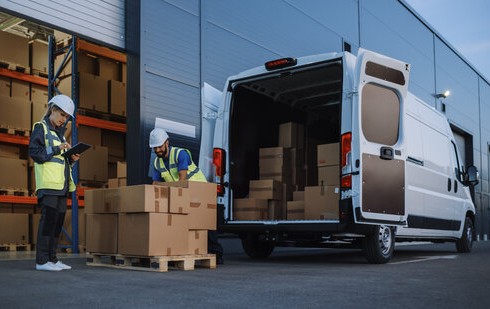
- Logistics automation – this chapter deals with how logistics automation can not only increase sales, but also optimize the cost of operating an e-store.
- Upcycling – the last chapter was devoted to the idea of upcycling, according to which garbage from waste can become raw materials. In this way, seemingly unusable things can acquire new value – including material value.
Artificial intelligence in marketing

In 2026, artificial intelligence is becoming the invisible “engine” of e-commerce. Intelligent, conversational retail assistants are playing an increasingly important role, using data on assortment, margins, sales and inventory to suggest business decisions to store owners – from sales recommendations to marketing tips.
AI is also changing the way customers search for products – they are increasingly doing so with the help of assistants, who prefer stores with well-described assortments, reliable availability data, clear delivery and returns policies, and a consistent experience across multiple channels.
The advantage will be built by companies that take care of data quality, boldly test new tools and learn to make decisions “in tandem” with AI.
Lukasz Balec, Head of AI Product at Shoper
It is unlikely to surprise anyone that artificial intelligence will be an important part of e-commerce strategies in 2026. According to Forrester’s predictions,
As we invest in AI agents, the expectations of their users are increasing. As early as 2025 Almost ¾ of companies (73%) expected that the use of AI would enable them to create a competitive advantage within a year. However, this percentage will decrease over time. The more popular AI tools are in the market, the more difficult it will be to stand out using them. For what it’s worth, it’s very likely that completely ignoring AI trends will have negative consequences for e-commerce companies.
A growing trend is the use of AI tools to co-create advanced automation. Companies are beginning to specialize (they will continue to do so in 2026) in using artificial intelligence. Fewer and fewer companies are looking at AI as superficially as they were just a few months ago. There is a growing recognition that the true potential of large language models lies not in their ability to generate simple graphics or text in a few tens of seconds, but in the support they can provide for more complex tasks and activities.
Optimization of marketing efforts using AI will be another very important point for marketers (including those responsible for online store creations). AI agents can assist in specific activities, such as:
- market research,
- Implementing creation tests,
- Analysis of competitor activities,
- Aggregating and processing data (for example, past brand creations).
Through a combination of the above, those in charge of marketing will be able to significantly speed up the creation of future creations. This is because a properly trained agent will be familiar with the brand’s image, voice and identity, making his hints and suggestions more relevant.
Unified Commerce – database integration and consistent shopping experience
A unified commerce strategy is a set of activities aimed at creating a consistent, unified shopping experience for customers.
Unified Commerce is based on database integration and – it is intended to be an improved, more modern and comprehensive version of omnichannel. By having a common database that includes both customer, product, inventory and order history information, stores are able to create a shopping process that always looks the same from the customer’s perspective – regardless of whether they are shopping from a mobile device, a computer or their VR goggles.
In 2025, only 17% of retailers in the U.S. could boast of implementing unified commerce techniques – a percentage that will increase significantly in the following years.
Unified commerce is one of those modern techniques that makes everyone a winner. Sellers lower their order fulfillment costs and see a drop in
What does this mean? In short:
Thanks to the permeability of the shopping experience, a process started on a mobile device or at a computer will be easily completed in a stationary store (for example, when there is a need to try on or try out a product). All of this works in the opposite direction as well.
Content tailored to AI (SEO, GEO, AEO).

Search engines have changed. Increasingly, instead of a list of links, we see a ready-made answer from AI. Just “being high in Google” is no longer enough, although it is still the basis. Today we add GEO (Generative Engine Optimization) and AEO (Answer Engine Optimization) to SEO.
GEO is writing content so that ChatGPT-type models can use it as a reliable, structured source. AEO is laying out content the way people ask – clearly, in questions and answers, with clear headings and simple language.
For Polish ePayments’ marketing, this means: building brand authority where AI gets its knowledge from, better content structure (headlines, schema.org, Q&A sections, and increased publication in trade media.
The future of online visibility is not just a struggle to rank on Google, but also to be the source of choice and citation for AI. And zero-click is not a failure. If someone sees the AI response, remembers the brand and later types us in directly or as a branded phrase, it means our marketing worked.
Janusz Mirowski, Polskie ePłatności
In recent years, a number of shortcuts have emerged to be the “new SEO.” Among the most commonly mentioned are:
- GEO (Generative Engine Optimization),
- AIO (Artificial Intelligence Optimization) and
- AEO (Answer Engine Optimization).
These concepts are very similar, and yet there are slight differences between them that are worth knowing – especially if you want to really stay on top of the hottest trends, and not just associate a topic.
GEO – Generative Engine Optimization
GEO is all about optimizing your content in such a way that your texts are the ones that select language models, generating the answers that show up in search results.
The key difference between GEO and the other shortcuts (we’ll come back to them in a moment) is that the idea is to create content from which the models will generate the answers themselves (and provide a link to the source).
Important!
It is worth remembering that GEO, which we have just discussed, and geomarketing are two completely different things and should not be confused with each other.
AEO (Answer Engine Optimization)
AEO is all about writing in a short, concise, ideally citable manner. The goal is to get as many citations as possible in AI tools (ChatGPT, Claude, Perplexity).
AEO functions best when content is created in the form of questions and answers. It’s also a good idea to implement structured data into the FAQ section present on the site – in this form, search engines read the data most easily and easily create snippets, or extended search results, from it.
AIO (Artificial Intelligence Optimization)
This acronym is used less frequently for two reasons. First: it is very capacious, not to say: too capacious. Optimizing content for artificial intelligence (or rather, large language models) is a generic term that doesn’t really indicate what to focus on.
What’s more, the acronym AIO is also used as a separate marketing term for improving artificial intelligence models. In this sense, AIO involves, among other things, providing them with properly prepared data or reducing the number of parameters to speed up the models.
Important!
Possible confusion over the meaning of AIO has been resolved in theory by the emergence of the abbreviation AISO (Artificial Intelligence Search Optimization), but in practice it is not so often used. However, it is worth being aware of its existence.
Zmierzch SEO?
Although the new abbreviations have worked their magic and carried widely across the Internet, finding their way into the consciousness of many, this does not mean that SEO is going away. The way algorithms search for content has changed, but some users are still happy to use traditional search results. Besides, and perhaps even more importantly, well understood SEO is a set of practices that encourage the creation of quality content. And that’s the kind of content that language models also value.
Modern payments – technologies for consumers and business customers

The online payments market has taught us a key lesson: it’s not worth chasing every new method, but improving what already works. BLIK and deferred payments (BNPL) have proven that success = consistent implementation + scaling of solutions that provide a real need. While payment methods seem to have stabilized, new solutions are emerging to change market dynamics. BLIK Recurring Payments and credit hubs that integrate financial products directly into checkout are not marketing buzzwords, but solutions that address a specific need: automating recurring payments and increasing conversions in financial products.
Click to Pay, a new solution from Visa and MasterCard, completes this portfolio. But the breakthrough will be the personalization of the payment process – AI analyzing the payer’s history, industry, shopping cart value and device to dynamically recommend the optimal method.
BLIK works well for mobile micropayments, BNPL for baskets up to PLN 1,500, digital wallets dominate mobile transactions. In the B2B segment, solutions for accessing fast financing based on actual cash flow will gain popularity.
Research shows that 68% of shopping cart abandonment is due to non-intuitive implementation of payment methods and lack of consistency across channels. Success in 2026 will come from perfect integration of these solutions and precise personalization that adapts each method to the context of the shopper.
Dawid Cichy, Tpay
Consumers need payments that are convenient, fast and tailored to their needs, and so do businesses. In 2026, e-commerce owners will focus not on implementing as many new payment methods as possible, but on making the ones that are already popular work even more efficiently and are even more easily accessible.
Online stores build their competitive advantage in many ways, starting with pricing, fast order processing and providing convenient payment methods.
Not all forms of payment need to appear in your store – rather, focus on those that your customers particularly appreciate:
- Got the most traffic from the mobile channel? Without ApplePay and GooglePay , don’t move.
- Do you have regular customers who place similar or the same orders regularly? Offer subscription payments with discounts.
- Do your customers sometimes abandon their shopping carts? Maybe it’s time to implement deferred payments and interest-free installments?
This, of course, is not the end of the possibilities. In some industries, accepting cryptocurrency payments and even such innovations as voice-authorized payments are growing in popularity.
Payment Tokenization
Payment tokenization is also an important trend that is gaining momentum. This is a solution that converts sensitive data (payment card numbers, CVV codes) into a unique string of characters, called a token. Such a string of characters represents value and allows transactions to be processed only in a specific environment (e.g., an online store).
What’s more, the store does not have access to sensitive data at any stage of order processing, but only to the token. This significantly increases the security of the transaction.
Automation – logistics and sales
What sets e-commerce apart is lightning-fast order processing. Consumers are used to the fact that an order placed one day, can reach them the very next. Rarely still on the same day.
In 2026, companies will seek to streamline logistics processes through automation. This is a formidable challenge, as logistics costs, which include courier company rates, but also fuel and storage prices, continue to rise.
Why the need to invest in logistics automation? As many as 96% of retailers believe that logistics offerings are key to sales. But it’s not just about ensuring the fastest possible delivery – customers expect choice.
Various delivery options
In the coming months, many vendors will offer their customers delivery in several options. Here is a sample breakdown:
- Express delivery (even the same day),
- Standard delivery (up to a few days),
- Green delivery (slower, but shipped by larger, more economical transportation).
In addition to the delivery time, the difference will, of course, be in the price. Organic delivery will more often be available at reduced prices or free of charge, while more expensive variants will ensure faster arrival of ordered products.
Endless aisle, or always available products
Logistics automation complements well with some of the elements of unified commerce discussed earlier. Data integration between different points also means always up-to-date inventory information – both in the online store and at physical locations and suppliers. The endless aisle model is a solution that uses these integrations to ensure that if a product is in short supply at one source, it is ordered automatically from another.
Upcycling – the next step on the road to sustainability
Greening takes many forms, and from a business perspective, the most interesting ones are those that allow you to take care of the planet while generating revenue at the same time. Upcycling is a trend that is growing in popularity, as it allows companies to realistically promote environmentalism without being slandered for greenwashing. However, it is fair to say that upcycling has a rather narrow range of applications in the context of online store operations. Unless it becomes a company’s specialty.
Upcycling is not just reprocessing waste (recycling), but going one step further: it is making new things from waste, thereby giving it a higher value. Here are some examples of upcycling:
- furniture made from industrial pallets (Euro pallets), wood waste and other materials,
- clothes and accessories made from old fabrics,
- jewelry and ornaments,
- Electronic devices using components from electro-waste,
- packaging made from paper and cardboard waste,
- Design elements made from glass, plastic or ceramic waste.
Advantages and disadvantages of upcycling
The above list is, of course, not all examples. Upcycling is just taking off, and the possibilities are endless. Why upcycling can be a good idea for business and online sales?
- Consumers are eager to buy environmentally friendly products, and are sometimes even willing to pay more for them.
- The cost of manufacturing and sourcing materials is often lower than when using brand new raw materials.
- Selling upcycled products scales well: you can start by adding just a few handmade items to your store’s assortment, and steadily expand your offerings over time as interest grows.
- Your company’s image will benefit from a pro-environmental approach – moreover, the use of upcycling will show consumers that you take environmental issues seriously, and not just as a way to build positive hype around your brand.
On the other hand, it is important to consider the challenges posed by upcycling.
- It’s easy to say that raw materials for upcycling cost little and can even be obtained for free, but it’s harder to actually find them. Tracking down a good, steady source of upcycling materials is a big part of success. Without it, the whole affair may turn out to be a lot more labor-intensive than it might have seemed at first, and thus – less profitable.
- The key is to estimate the real demand for upcycled products. There is a long and bumpy road from admiration for the possibilities of making “something out of nothing” to a purchasing decision. The trick is not to end up with unique products that no one wants to buy.
- Upcycling often requires the right facilities (albeit tools or simple machines), time and specific skills. Customers will not pay for just any upcycled product, but only for one that stands out for its quality of workmanship, ingenuity or design.
Summary – key trends in online trading
2026 will be another very dynamic period for the e-commerce industry. Online store owners, if they want to maintain or develop a competitive advantage, must focus on selected trends and start implementing changes consistently.
It is worth exercising moderation in this context – not all of the trends described in the article will prove beneficial for your online store. So pick two or three whose effectiveness you want to verify, and start preparing. Determine the time when you expect the first results, and then evaluate whether the chosen direction turned out to be appropriate.
We hope that the trends described will help you prepare your business for the challenges that 2026 brings with it. We want your online store to be the example of a place where new technologies and the latest trends are setting the course for the future!





 15.04.2026